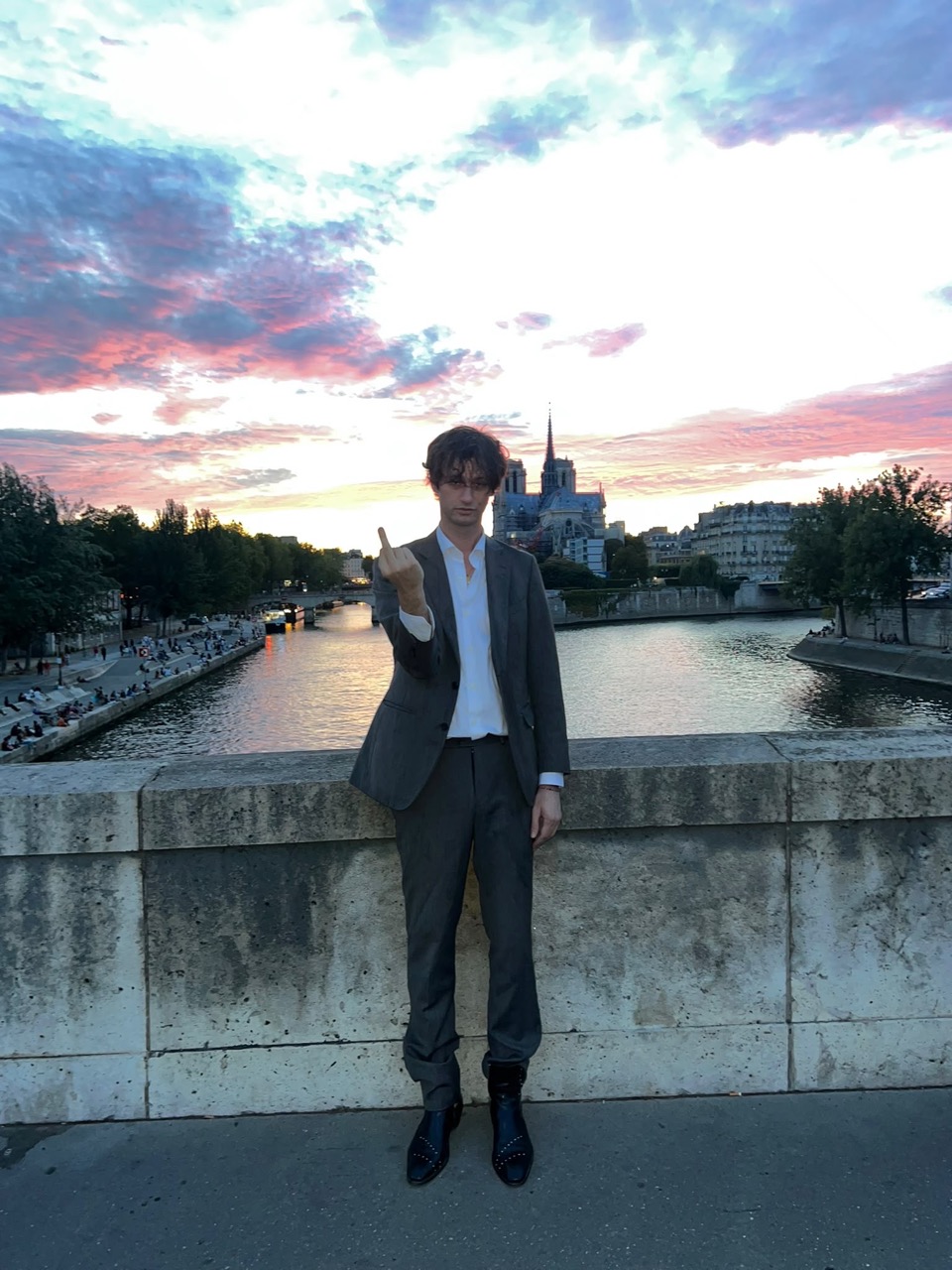
It was still unbearably hot, the kind of heat that, after half a dozen days, continued to dominate the front pages of the French newspapers and beyond. Le Monde ran the headline “Record Temperatures in Paris,” Le Figaro “The Heatwave Continues,” while The New York Times, which nevertheless had to account for what was probably the most widely followed sporting event in history taking place at that very moment across American cities, the World Cup of football, opened its international section with “Europe Is Burning.”
Seguía haciendo un calor insoportable, de ese tipo de calor que, después de media docena de días, continuaba dominando las primeras planas de los periódicos franceses y de muchos otros. Le Monde llevaba el titular «Temperaturas récord en París», Le Figaro, «La ola de calor continúa», mientras que The New York Times, que aun así tenía que hacerse cargo del que probablemente era el acontecimiento deportivo más seguido de la historia, la Copa Mundial de futbol, que en ese preciso momento se disputaba en distintas ciudades estadounidenses, abría su sección internacional con «Europa arde».
Even the weekly business magazines were talking about the heat, though in relation to the damage it was expected to inflict on crops: the lack of rainfall and the exceptionally high temperatures were bringing agriculture across half of Europe to its knees, Italy and Spain above all. Several municipalities had requested that the procedures necessary to declare a state of natural disaster be initiated, allowing farming businesses to access the available support measures and confront a crisis that threatened to put the future of the agricultural sector under severe strain. The damage was already extensive: meadows and pastures had been compromised by as much as eighty percent, maize yields were expected to fall by fifty percent, and similarly critical conditions were affecting crops sown in late spring, such as soybeans. Many newspapers also quoted, almost unanimously, university professors and experts who argued that it was essential to modernise a water distribution system that was losing an unacceptable amount of water, and to create a widespread network of reservoirs capable of guaranteeing the agricultural sector’s water self-sufficiency.
Incluso las revistas semanales de negocios hablaban del calor, aunque en relación con los daños que se esperaba que provocara en los cultivos: la falta de lluvia y las temperaturas excepcionalmente altas estaban llevando a la agricultura de buena parte de Europa al límite, sobre todo en Italia y España. Varios municipios habían solicitado iniciar los procedimientos necesarios para declarar un estado de desastre natural, permitiendo a las empresas agrícolas acceder a las medidas de apoyo disponibles y hacer frente a una crisis que amenazaba con poner bajo una enorme presión el futuro del sector agrícola. Los daños ya eran considerables: los prados y pastizales habían quedado comprometidos hasta en un ochenta por ciento, se esperaba que las cosechas de maíz cayeran un cincuenta por ciento y condiciones igualmente críticas estaban afectando a los cultivos sembrados a finales de la primavera, como la soya. Muchos periódicos también citaban, casi unánimemente, a profesores universitarios y expertos que sostenían que era indispensable modernizar un sistema de distribución de agua que estaba perdiendo una cantidad inaceptable del recurso, así como crear una amplia red de embalses capaz de garantizar la autosuficiencia hídrica del sector agrícola.
As for me, I was at my limit too. I was exhausted, sleep-deprived (partly due to the World Cup matches schedules), and I had fallen behind on my work. I didn’t want to drink, I didn’t want to stay out late, I didn’t want to hear another word about aspiring rappers, drugs, heiresses or models, I only wanted to wake up in my own bed, alone, at a decent hour, drink a cup of coffee and sit down in front of my computer to work.
En cuanto a mí, yo también había llegado a mi límite. Estaba exhausto, privado de sueño —en parte por los horarios de los partidos del Mundial— y me había atrasado con el trabajo. No quería beber, no quería quedarme hasta tarde, no quería volver a escuchar una sola palabra sobre raperos aspirantes, drogas, herederas o modelos. Solo quería despertarme en mi propia cama, solo, a una hora decente, tomar una taza de café y sentarme frente a la computadora a trabajar.
At the time I was writing an article on the anarchist galaxy and its scattered cells across Europe, all signs pointing to the idea that they would soon gather in Northern Italy for a major demonstration against the construction of the high-speed rail infrastructure in Piedmont. According to the newspapers, they would be joined again by squatters, far-left movements, and individuals affiliated with the so called Grey Wolves, a name referring to the historic Turkish extremist anarcho-insurrectionalist movement, who were accused of having thrown Molotov bombs at Falcemagna in Bussoleno in the early 2000s.
En aquel momento estaba escribiendo un artículo sobre la galaxia anarquista y sus células dispersas por Europa, todo parecía indicar que pronto se reunirían en el norte de Italia para una gran manifestación contra la construcción de la infraestructura ferroviaria de alta velocidad en Piamonte. Según los periódicos, volverían a unirse a ellos los squatters, movimientos de extrema izquierda e individuos vinculados a los llamados Lobos Grises, nombre que hacía referencia al histórico movimiento anarquista-extremista e insurreccionalista turco, acusados de haber lanzado bombas molotov contra Falcemagna, en Bussoleno, a principios de los años dos mil.
To attack State and Capital at every possible moment, regardless of any strategic or tactical consideration: unlike Pierre-Joseph Proudhon, who rejected violence as a revolutionary method, and unlike the various other currents that had developed throughout the history of libertarian thought (anarcho-communists, anarcho individualists, organisationalists, anti-organisationalists, educationalists, and so on) which differed mainly in their political and organisational conceptions, these groups distinguished themselves above all through their conception of the means to be employed in overthrowing the State.
Atacar al Estado y al Capital en cada momento posible, sin importar ninguna consideración estratégica o táctica: a diferencia de Pierre-Joseph Proudhon, quien rechazaba la violencia como método revolucionario, y de las distintas corrientes que se habían desarrollado a lo largo de la historia del pensamiento libertario —anarco-comunistas, individualistas, organizacionistas, anti-organizacionistas, educacionistas y demás—, que se diferenciaban principalmente por sus concepciones políticas y organizativas, estos grupos se distinguían sobre todo por su concepción de los medios que debían emplearse para derrocar al Estado.
Whereas a large part of the anarchist movement believed that, in the present historical phase and in countries where at least a minimum degree of formal democracy existed, violent uprising was no longer a convenient strategy, the insurrectionalists regarded revolt as the proper instrument for subverting the established order. Propaganda by the deed, and all those forms of direct action intended to communicate ideas not merely through words, but also through concrete acts; actions carried out in retaliation for a specific event, in the hope of triggering a broader uprising, eventually culminating in insurrection itself: the liberation of a physical space from authority and the hierarchy imposed by a ruling class, to be immediately replaced by a libertarian society organised horizontally.
Mientras una buena parte del movimiento anarquista consideraba que, en la fase histórica actual y en países donde existía al menos un grado mínimo de democracia formal, la insurrección violenta ya no era una estrategia conveniente, los insurreccionalistas consideraban la revuelta como el instrumento adecuado para subvertir el orden establecido. Propaganda por el hecho, y todas aquellas formas de acción directa destinadas a comunicar ideas no solamente mediante palabras, sino también a través de actos concretos; acciones llevadas a cabo como represalia por un acontecimiento específico, con la esperanza de desencadenar una revuelta más amplia que finalmente culminara en la propia insurrección: la liberación de un espacio físico de la autoridad y la jerarquía impuestas por una clase dominante, para ser reemplazadas inmediatamente por una sociedad libertaria organizada horizontalmente.
I had been searching online and in libraries, sometimes with considerable difficulty, for the writings of Wolfi Landstreicher and Costantino Cavalleri, whose ideas had found especially fertile ground first in Italy and Greece, and later in Spain. It was precisely on the Iberian Peninsula that, in 1996, the Rivolta group organised the conference of the Anti-Authoritarian Insurrectionalist International.
Había estado buscando en internet y en bibliotecas, a veces con bastante dificultad, los escritos de Wolfi Landstreicher y Costantino Cavalleri, cuyas ideas habían encontrado un terreno especialmente fértil primero en Italia y Grecia, y después en España. Fue precisamente en la península ibérica donde, en 1996, el grupo Rivolta organizó la conferencia de la Internacional Insurreccionalista Anti-Autoritaria.
Andrea Costa was another of these thinkers, at least until he converted to parliamentary socialism, as was Errico Malatesta, who was simultaneously both theorist and man of action among those who attempted the insurrection in Bologna in 1874 and in the Matese mountains in 1877.
Andrea Costa había sido otro de estos pensadores, al menos hasta que se convirtió al socialismo parlamentario, al igual que Errico Malatesta, quien fue simultáneamente teórico y hombre de acción entre quienes intentaron la insurrección en Bolonia en 1874 y en las montañas de Matese en 1877.
Another recurring figure within this universe was Alfredo Maria Bonanno, whose theories of informal insurrectionalism, based on armed joy and, above all, on affinity groups, that is, the temporary aggregation of individuals who came together around limited and highly heterogeneous objectives, represented one of the cornerstones of the doctrine. Although many anarchist groups did not formally identify with Bonanno’s theories, there is little doubt that he influenced many of them, such as the Informal Anarchist Federation, whose actions appeared to be conceptually inseparable from his writings.
Otra figura recurrente dentro de este universo era Alfredo Maria Bonanno, cuyas teorías sobre el insurreccionalismo informal, basadas en la alegría armada y, sobre todo, en los grupos de afinidad —es decir, la agrupación temporal de individuos que se reunían alrededor de objetivos limitados y sumamente heterogéneos— representaban una de las piedras angulares de la doctrina. Aunque muchos grupos anarquistas no se identificaban formalmente con las teorías de Bonanno, difícilmente podía negarse su influencia sobre muchos de ellos, como la Federación Anarquista Informal, cuyas acciones parecían conceptualmente inseparables de sus escritos.
My entire article revolved around a fundamental question which, once formulated, immediately generated many others: Do the ends justify the means? And if they do, do they always, or only under certain circumstances? Are there ends so noble as to make morally acceptable means that, taken in isolation, we would otherwise consider unacceptable? Or is it the means themselves that determine the moral quality of the end? Is it possible to pursue justice through what we would otherwise call injustice? And when we judge an action, should we look at the intentions of the person who performs it, at the consequences it produces, or at the principles it violates?
Todo mi artículo giraba alrededor de una pregunta fundamental que, una vez formulada, generaba inmediatamente muchas otras: ¿los fines justifican los medios? Y si lo hacen, ¿siempre o solamente bajo determinadas circunstancias? ¿Existen fines tan nobles que permitan considerar moralmente aceptables medios que, tomados de manera aislada, consideraríamos inaceptables? ¿O son los propios medios los que determinan la calidad moral del fin? ¿Es posible perseguir la justicia mediante aquello que, de otro modo, llamaríamos injusticia? Y cuando juzgamos una acción, ¿deberíamos fijarnos en las intenciones de quien la lleva a cabo, en las consecuencias que produce o en los principios que viola?
Are there values that cannot be sacrificed even in the name of the common good, or is every principle negotiable in the face of a sufficiently important result? And when it is not an individual pursuing that end but the State itself, do the rules change?
¿Existen valores que no puedan sacrificarse ni siquiera en nombre del bien común, o es todo principio negociable frente a un resultado suficientemente importante? Y cuando quien persigue ese fin no es un individuo sino el propio Estado, ¿cambian las reglas?
All questions that inevitably drew into the debate the work of Machiavelli, Hobbes, Max Weber, Carl Schmitt, Hannah Arendt, Michel Foucault and Giorgio Agamben, and which, in my mind, some editor-in-chief at a Class A journal might perhaps have appreciated.
Todas preguntas que inevitablemente llevaban al debate las obras de Maquiavelo, Hobbes, Max Weber, Carl Schmitt, Hannah Arendt, Michel Foucault y Giorgio Agamben, y que, en mi cabeza, quizá algún editor en jefe de una revista de primera categoría habría sabido apreciar.
I didn’t want to go out, I wanted to try and finish the article before the aforementioned demonstration, which, according to the rumours, was due to take place in two or three weeks’ time, but Grace convinced me to stop by a brand presentation at Dover Street Market, where champagne was being served at the entrance. I thought one glass wouldn’t make much difference after all, but that’s exactly how you get screwed over.
No quería salir, quería intentar terminar el artículo antes de la manifestación mencionada anteriormente, que, según los rumores, tendría lugar en dos o tres semanas, pero Grace me convenció de pasar por una presentación de marca en Dover Street Market, donde servían champaña en la entrada. Pensé que una copa no haría demasiada diferencia después de todo, pero así es exactamente como terminas jodido.
The clothes were almost artistic, some looked like clouds, I think they fully embodied what haute couture means, or at least what I imagine it to mean. Obviously, they were not clothes for everyday, yet despite a certain eccentricity, I could easily picture them on a woman. The menswear, on the other hand, was simply too eccentric. Not that a man cannot dress eccentrically, of course, but, just to give an example, both a professor of philology and a singer could have worn those garments to a gala evening if they had been women; among men, however, only a singer could have done so (indeed, only a certain kind of singer), and certainly not a professor of philology, without running into any sort of awkwardness.
La ropa era casi artística; algunas prendas parecían nubes. Creo que encarnaban por completo lo que significa la alta costura, o al menos lo que yo imagino que significa. Evidentemente, no eran prendas para todos los días y, a pesar de cierta excentricidad, podía imaginarlas fácilmente sobre una mujer.
La ropa masculina, en cambio, era simplemente demasiado excéntrica. No es que un hombre no pueda vestirse de manera excéntrica, por supuesto, pero, solo por poner un ejemplo, tanto un profesor de filología como un cantante podrían haber llevado esas prendas a una gala si hubieran sido mujeres; entre los hombres, sin embargo, solamente un cantante podría haberlo hecho —de hecho, solamente cierto tipo de cantante— y desde luego no un profesor de filología sin encontrarse con algún tipo de incomodidad.
We took another two glasses of champagne and sat outside on the terrace, where United Press photographers, there to document Paris’ record breaking heat, mingled with fashion editors from i-D, Vogue and 10 Magazine. Two of them, both well-established names in the world of social media, were discussing the monthly income they were receiving from a platform called Substack and the freedom it gave them compared to what they had enjoyed as editors-in-chief of their respective magazines. Meanwhile, I received a message from Doug asking where I was. When I replied, he told me he was only a short distance away and would be there in a few minutes.
Tomamos otras dos copas de champaña y nos sentamos afuera, en la terraza, donde fotógrafos de United Press, que estaban ahí para documentar el calor récord de París, se mezclaban con editores de moda de i-D, Vogue y 10 Magazine. Dos de ellos, ambos nombres consolidados en el mundo de las redes sociales, discutían sobre los ingresos mensuales que estaban recibiendo de una plataforma llamada Substack y sobre la libertad que les ofrecía en comparación con la que habían tenido como editores en jefe de sus respectivas revistas. Mientras tanto, recibí un mensaje de Doug preguntándome dónde estaba. Cuando le respondí, me dijo que estaba a poca distancia y que llegaría en unos minutos.
And so, a little later, Doug Ellersons appeared: motorcycle boots, a leather jacket and a beret, a combination he wore like a uniform together with the two bags he always carried, in which he kept his cameras and, in practice, a large part of his work. And, just as he had told me the previous evening again by message, with him was an elderly gentleman with a distinguished appearance, dressed in grey wool trousers and a striped shirt.
Y así, poco después, apareció Doug Ellersons: botas de motociclista, chaqueta de cuero y una boina, una combinación que llevaba como un uniforme, junto con las dos bolsas que siempre cargaba, donde guardaba sus cámaras y, en la práctica, buena parte de su trabajo. Y, tal como me había vuelto a decir por mensaje la noche anterior, con él estaba un hombre mayor de apariencia distinguida, vestido con pantalones de lana gris y una camisa a rayas.
This ninety-year-old was none other than Anthony Haden-Guest, writer, art critic and socialite, a sort of living archive of everything that revolved around Studio 54, Andy Warhol, Basquiat, cocaine, Quaaludes, aristocratic gossip and the cultural demimonde. Two books published, and I don’t know how many articles that have become part of the history of journalism in magazines such as Rolling Stone, Vanity Fair, The New Yorker, The Paris Review and Esquire. The Rolling Stones had injected heroin in front of him so that he could write about it, and legend has it that Basquiat died because, anxious over the article Anthony was writing about him for Vanity Fair, while in his Great Jones Street studio on an August night in New York City, he took a dose far larger than usual, sending himself into an overdose, and straight into the Club 27.
Aquel hombre de noventa años no era otro que Anthony Haden-Guest, escritor, crítico de arte y socialite, una especie de archivo viviente de todo aquello que giraba alrededor de Studio 54, Andy Warhol, Basquiat, la cocaína, los Quaaludes, los chismes aristocráticos y el demimonde cultural. Dos libros publicados y no sé cuántos artículos que se habían convertido en parte de la historia del periodismo en revistas como Rolling Stone, Vanity Fair, The New Yorker, The Paris Review y Esquire. Los Rolling Stones habían inyectado heroína frente a él para que pudiera escribir sobre ello, y cuenta la leyenda que Basquiat murió porque, ansioso por el artículo que Anthony estaba escribiendo sobre él para Vanity Fair, mientras se encontraba en su estudio de Great Jones Street, una noche de agosto en Nueva York, tomó una dosis mucho mayor de lo habitual, provocándose una sobredosis y entrando directamente al Club 27.
«Why are you here, Anthony?» Grace asked him.
«I’m writing an article about Doug. Or at least I’m trying to.»
—¿Por qué estás aquí, Anthony? —le preguntó Grace.
—Estoy escribiendo un artículo sobre Doug. O al menos estoy intentando hacerlo.
Doug looked like a character who had stepped straight out of the New York of Anthony’s books. He drifted from place to place like an American bohémien, now Paris, now London, now Los Angeles, the city where he had been born. He had just spent two months in Tokyo with his girlfriend, a model from Northern Europe, something like Swedish, or perhaps Finnish, and had ridden I don’t know how many kilometres around the city on an electric Honda scooter photographing Yakuza members, prostitutes and geishas.
Doug parecía un personaje salido directamente de uno de los libros de Anthony, de aquel Nueva York que describían. Se desplazaba de un lugar a otro como un bohemio estadounidense: ahora París, ahora Londres, ahora Los Ángeles, la ciudad donde había nacido. Acababa de pasar dos meses en Tokio con su novia, una modelo del norte de Europa, algo así como sueca, o quizá finlandesa, y había recorrido no sé cuántos kilómetros por la ciudad en una motoneta eléctrica Honda, fotografiando miembros de la Yakuza, prostitutas y geishas.
«Cigarettes are cheap. A pack of Seven Stars costs six hundred yen, that’s less than four euros, and you can eat the best bluefin tuna of your life for what a hamburger costs you here,» he used to tell me whenever he called. We didn’t know his age, where he had come from, or even whether that was his real name. But somehow, one day after another, Doug had entered all of our lives.
—Los cigarrillos son baratos. Una cajetilla de Seven Stars cuesta seiscientos yenes, menos de cuatro euros, y puedes comer el mejor atún rojo de tu vida por lo que aquí te cuesta una hamburguesa —solía decirme cada vez que llamaba. No sabíamos su edad, de dónde había venido ni siquiera si ese era su verdadero nombre. Pero, de alguna manera, un día tras otro, Doug había entrado en nuestras vidas.
With me it happened like this: we met one summer afternoon at L’Area because he was sitting at the table next to mine. We must have spoken for no more than a minute. Then, about a year later, during the Biennale, I had just left the dinner Burberry had organised at Harry’s Bar because I didn’t know anyone there and wanted to join my friends, who, on the other hand, were having a blast. As I was walking near the Accademia, I crossed paths with Doug, who was coming in the opposite direction. Our eyes met, and we both remembered having met before. In the end, he stayed with me the whole night and, since he didn’t have a place to stay, he slept on my couch. He had no social media, and even WhatsApp wasn’t really his thing, he used a phone for what it was originally meant for: making phone calls.
Conmigo había sucedido así: nos conocimos una tarde de verano en L’Area porque estaba sentado en la mesa de al lado. Debimos haber hablado no más de un minuto. Después, aproximadamente un año más tarde, durante la Biennale, acababa de salir de la cena que Burberry había organizado en Harry’s Bar porque no conocía a nadie ahí y quería reunirme con mis amigos, que, en cambio, se la estaban pasando increíble. Mientras caminaba cerca de la Accademia, me crucé con Doug, que venía en dirección contraria. Nuestras miradas se encontraron y ambos recordamos habernos conocido antes. Al final, se quedó conmigo toda la noche y, como no tenía dónde quedarse, durmió en mi sofá. No tenía redes sociales y ni siquiera WhatsApp era realmente lo suyo. Usaba el teléfono para aquello para lo que originalmente había sido creado: hacer llamadas.
His work is remarkable, his photographs are genuine works of art, and not for nothing did he have a permanent collection under his name at the Centre Pompidou. But what truly fascinated me was the way his very life was itself a work of art. He was obsessed with his work, with every detail, every concept that permeated it, and for that reason it did not surprise me in the slightest that someone like Anthony Haden-Guest was writing an article about him. Every time I got up to fetch another glass of wine and asked Anthony whether he wanted one, he would reply, «Of course.»
Su trabajo es extraordinario, sus fotografías son auténticas obras de arte y no por nada tenía una colección permanente bajo su nombre en el Centre Pompidou. Pero lo que realmente me fascinaba era la manera en que su propia vida era una obra de arte. Estaba obsesionado con su trabajo, con cada detalle, con cada concepto que lo atravesaba y, por eso, no me sorprendía en lo más mínimo que alguien como Anthony Haden-Guest estuviera escribiendo un artículo sobre él. Cada vez que me levantaba para buscar otra copa de vino y le preguntaba a Anthony si quería una, respondía “por supuesto”.
He told us that his friends had forced him to attend an Alcoholics Anonymous meeting, but that he felt anything but an alcoholic, even though he had certainly had his fair share of vices throughout his life. Be that as it may, he had no trouble keeping up with me when it came to drinking. Doug wanted to photograph him in the style of one of his signature works: three hands belonging to three different people resting on his face. So I placed my hand on the left side of Anthony’s face, Grace put hers on the right, and Antonio, a friend of Dario’s who looked like James Franco, put his hand on top of Anthony’s head. Doug also wanted someone to document the scene itself, so he asked the first person who happened to be walking past behind him.
Nos contó que sus amigos lo habían obligado a asistir a una reunión de Alcohólicos Anónimos, pero que él no se sentía alcohólico en absoluto, aunque ciertamente había tenido su buena dosis de vicios a lo largo de su vida. Fuera como fuera, no tenía ningún problema para seguirme el ritmo cuando se trataba de beber. Doug quería fotografiarlo al estilo de una de sus obras más reconocibles: tres manos pertenecientes a tres personas diferentes descansando sobre su rostro. Así que coloqué mi mano en el lado izquierdo de la cara de Anthony, Grace puso la suya en el derecho y Antonio, un amigo de Dario que se parecía a James Franco, colocó la suya sobre la cabeza de Anthony. Doug también quería que alguien documentara la escena, así que le pidió al primero que pasaba por detrás de él.
The whole thing lasted about twelve minutes. Doug shot his three Polaroids, while his improvised assistant did his best to take photographs of the making of them. When the man walked away for a moment, Grace told us that he was Glenn Martens, the creative director of Margiela and Diesel. We stayed talking with him until the venue had to close. He was kind, he invited us to the show, and in return I told him about how, the previous year, I had accompanied Harley to the Margiela show and waited for her outside, drinking bottles of 1664 with the homeless and drug dealers who lingered at the intersection of Rue de Tanger and Rue Archereau, in the nineteenth arrondissement.
Todo duró unos doce minutos. Doug tomó sus tres Polaroids, mientras que su asistente improvisado hacía lo posible por fotografiar el proceso. Cuando el hombre se alejó un momento, Grace nos dijo que era Glenn Martens, el director creativo de Margiela y Diesel. Nos quedamos hablando con él hasta que el lugar tuvo que cerrar. Fue amable, nos invitó al desfile y, a cambio, le conté cómo el año anterior había acompañado a Harley al desfile de Margiela y había esperado afuera por ella, tomando botellas de 1664 con los vendedores de droga que se quedaban en la intersección de Rue de Tanger y Rue Archereau, en el distrito 19.
One of them had a family back in Pakistan, a wife and two daughters whose photograph was the screensaver on his phone, but he was gay, unable to accept his own homosexuality, and had become an alcoholic in an attempt not to think about it. Shortly after telling me all this, once we had already drunk two beers together (and God knows how many he’d had before I arrived), he grabbed the arse of a young man who had just sat down with us. The guy became furious; he very nearly punched him. He knew it was wrong, but perhaps it was the most exciting thing that had happened to him in weeks.
Uno de ellos tenía una familia en Pakistán, una esposa y dos hijas cuya fotografía aparecía como fondo de pantalla en su teléfono, pero era gay, incapaz de aceptar su propia homosexualidad, y se había convertido en alcohólico en un intento por no pensar en ello. Poco después de contarme todo esto, cuando ya habíamos tomado dos cervezas juntos —y Dios sabe cuántas había bebido él antes de que yo llegara—, agarró el trasero de un joven que acababa de sentarse con nosotros. El tipo se enfureció; estuvo a punto de golpearlo. Sabía que estaba mal, pero quizá era lo más emocionante que le había sucedido en semanas.
«Fucking faggot,» the young man shouted. «Who the fuck do you think I am? Do you think I’m a faggot too?» I don’t think he meant it as an insult, he had simply grown up on the tenements, where people spoke like that. His name was Marc. He worked in a laundry, ironing trousers for a few cents, and went to Paris Saint-Germain matches with his brother, who, Marc told me, had just received some sort of dispatch from the Ministry of Foreign Affairs of their home country regarding what sounded like a fraud case. My French, however, was dreadful, and I couldn’t quite understand what he was trying to explain
—Maricón —gritó el joven—. ¿Quién carajo crees que soy? ¿Crees que yo también soy maricón?—. No creo que lo dijera como un insulto. Simplemente había crecido en los barrios populares, donde la gente hablaba así. Se llamaba Marc. Trabajaba en una lavandería, planchando pantalones por unos cuantos centavos, e iba a los partidos del Paris Saint-Germain con su hermano, quien, según me contó Marc, acababa de recibir una especie de comunicación del Ministerio de Asuntos Exteriores de su país de origen relacionada con lo que parecía ser un caso de fraude. Mi francés, sin embargo, era terrible y no terminaba de entender lo que intentaba explicarme.
I stayed with them until Harley came out of the show and the paparazzi descended on her to take photographs. How beautiful she was that day. I’ll never forget it. We had eaten hamburgers sitting on the steps of a bridge over the Canal Saint-Martin, and kissed in Place de la République while teenage skaters smoked weed beneath the shade of oaks and plane trees. Do you remember?
I wonder where you were now. I wonder whether you were in Los Angeles or London, I wonder whether you had managed to fulfil your dream of becoming a star. I wonder whether you had found someone who loved you for who you were, as every woman and every human being deserves to be loved. Perhaps someone from your own world, from show business. Where were you, my love? Recording your songs in America? Writing your novel on your iPad in a cafe? Your poems? Painting your canvases in Mallorca? Acting in an independent film? Or posing as beautiful as you were for fashion editorials and luxury brands? Which path eventually rewarded all the effort you had put into becoming famous? How far had you gone in pursuit of success? And what compromises had you made along the way?
I will never forget your smile, dream of Binnenstad, my love from the East. My God, how strange life is, one day you think you’ll spend the rest of your life with someone, and shortly afterwards you don’t even know where they are anymore. And yet, isn’t all of this romantic after all?
Do you remember, my love, when we told each other I love you on the banks of the Seine, when we held hands at dawn in Piazza San Marco? Do you remember when we watched the fir trees change colour with the coming of autumn in the mountains of Cortina, and watched the sun set over the roofs of Tangier? Do you remember Milan with the Brian Jonestown Massacre and Bologna with the Jesus and Mary Chain? Do you remember kissing on the dunes of Sardinia, and Slovenia in the summertime?
Do you remember when we got drunk in Ibiza, and when we bought presents for your family in that little shop in Madrid? Do you remember that birthday of yours in Mallorca? Your father’s birthday in Amsterdam, when the police handcuffed me to the door of the patrol car with ecstasy in the pocket of my coat? Christmas in Vienna, New Year’s Eve in London. The afternoons in Rome, the lights of Naples.
We made love in so many cities. We told each other ti amo sitting on park benches, in the squares, at bus stops, while we were flying through the sky or walking home in the evening. We told each other to fuck off in a thousand different places, and kissed in just as many. I have no idea how many times I kissed you.
I loved you when you helped me cook dinner. I loved you when you puffed your cheeks slightly as you were about to say something you didn’t really want to say; when your voice changed and you called me “my love” because you wanted to ask me something; when you put on your lipstick. I loved you when you got angry and said, “In what world?” I loved you when you woke up late in the morning.
I loved you when you were jealous, when you watched your Korean dramas. I loved you when you realised I was anxious about something and held me tightly; I loved you when, in the evenings, you were the anxious one, caressing your arms the way your mother used to when you were little, and I held you even tighter.
I loved you when I watched you sleeping; when, in the morning, I couldn’t stop kissing you even though I risked waking you up. I loved you when you danced in the car because you liked a song, I loved you when you added paprika to the pasta, when you video-called me from another city wearing your big headphones.
I loved you when you were messy, when you smoked a cigarette before coming into our home. I loved you when you looked at something on your phone and said, “Wait, what?” I loved you when you smiled, I loved you when you were sad, when you cried and spoke in a quiet voice.
I loved you when you asked me what you should wear that evening and I loved you when you talked about politics. I loved you when we were about to fall asleep and you whispered, “I love you,” and I answered, “I love you more.”
I loved you when you met Carl. I loved you when we watched films hugging each other, when you took your make-up off before going to bed, when I was writing articles for you. I loved you when you lowered your head ever so slightly so that I could kiss your forehead. I loved you while we made love. My God, how I loved you.
I loved you when you ordered a salad, when you bought yourself a Fanta, when you checked how much a bottle of water cost at the airport and when you looked to see whether there was a Pret A Manger nearby.
I loved you when you were drunk and said, “Oh my God, I love you so much,” in that way and with that smile of yours. I loved you when you asked me what time we had to leave so you could set your alarm an hour earlier and get ready without rushing.
I loved you when you pushed your food onto my plate for me to finish, and when you asked me, “My love, will you take a nice picture of me tonight?” I loved you when you were angry and we insulted each other, and I loved you when we made peace by making love.
I loved you when you called your girlfriends and said “dead” whenever something made you laugh. I loved you when you asked me a thousand questions, and I loved you when I wasn’t really listening and simply answered, “yes amore.”
I loved you when people asked where you were from and you replied “Malaysian-Chinese-French-Dutch,” and when you were happy about the emojis you used in your messages.
I loved you when you sang in the bathroom, when you checked your Instagram statistics and when you told me about your dreams. I loved you when you were enthusiastic, when you were making your plans, when you were talking about our future.
I loved you when you wrote the first lines on the Lettera 32 beside the Christmas tree, when you tasted frittelle for the first time in February, when you spoke Italian.
I loved you when you were lost in your thoughts and whispered to yourself, “cutie cutie,” and I loved you when I saw your photographs in magazines. I loved you when you chose the TV series we watched, when you chose the restaurants where we ate. I loved you when you read a book on the sofa.
My God, Harley, how I have loved you. And how beautiful and heartbreaking it is to think about it now. I have loved you so much that I still love you, and I always will.
I wonder if I’ll ever see you again, I wonder if we’ll speak on the phone when the first October rains arrive, I wonder if we’ll ever kiss again.
Me quedé con ellos hasta que Harley salió del desfile y los paparazzi se abalanzaron sobre ella para tomarle fotografías. Qué hermosa estaba ese día. Nunca lo olvidaré. Habíamos comido hamburguesas sentados en las escaleras de un puente sobre el Canal Saint-Martin y nos habíamos besado en la Place de la République mientras adolescentes skaters fumaban marihuana bajo la sombra de robles y plátanos. ¿Te acuerdas?
Me pregunto dónde estarás ahora. Me pregunto si estabas en Los Ángeles o en Londres, me pregunto si habías conseguido cumplir tu sueño de convertirte en una estrella. Me pregunto si habías encontrado a alguien que te amara por quien eras, como toda mujer y todo ser humano merece ser amado. Quizá alguien de tu propio mundo, del mundo del espectáculo. ¿Dónde estabas, mi amor? ¿Grabando tus canciones en Estados Unidos? ¿Escribiendo tu novela en tu iPad, en algún café? ¿Tus poemas? ¿Pintando tus lienzos en Mallorca? ¿Actuando en una película independiente? ¿O posando, tan hermosa como eras, para editoriales de moda y marcas de lujo? ¿Qué camino terminó recompensando todo el esfuerzo que habías puesto en convertirte en famosa? ¿Qué tan lejos habías llegado en tu búsqueda del éxito? ¿Y qué compromisos habías hecho por el camino?
Nunca olvidaré tu sonrisa, sueño de Binnenstad, mi amor del Este. Dios mío, qué extraña es la vida. Un día crees que pasarás el resto de ella con alguien y, poco después, ni siquiera sabes dónde está esa persona. Y, sin embargo, ¿no es todo esto romántico después de todo?
¿Recuerdas, mi amor, cuando nos dijimos «te amo» a orillas del Sena, cuando nos tomamos de la mano al amanecer en la Piazza San Marco? ¿Recuerdas cuando vimos cómo los abetos cambiaban de color con la llegada del otoño en las montañas de Cortina y vimos ponerse el sol sobre los techos de Tánger? ¿Recuerdas Milán con Brian Jonestown Massacre y Bolonia con The Jesus and Mary Chain? ¿Recuerdas cuando nos besamos en las dunas de Cerdeña y Eslovenia en verano?
¿Recuerdas cuando nos emborrachamos en Ibiza y cuando compramos regalos para tu familia en aquella pequeña tienda de Madrid? ¿Recuerdas aquel cumpleaños tuyo en Mallorca? El cumpleaños de tu padre en Ámsterdam, cuando la policía me esposó a la puerta del coche patrulla con éxtasis en el bolsillo de mi abrigo. Navidad en Viena, Año Nuevo en Londres. Las tardes en Roma, las luces de Nápoles.
Hicimos el amor en tantas ciudades. Nos dijimos ti amo sentados en bancas de parques, en plazas, en paradas de autobús, mientras volábamos por el cielo o caminábamos de regreso a casa por la noche. Nos dijimos que nos fuéramos a la mierda en mil lugares diferentes y nos besamos en otros tantos. No tengo idea de cuántas veces te besé.
Te amé cuando me ayudabas a preparar la cena. Te amé cuando inflabas ligeramente las mejillas justo antes de decir algo que realmente no querías decir; cuando cambiaba tu voz y me llamabas «mi amor» porque querías pedirme algo; cuando te ponías el labial. Te amé cuando te enojabas y decías: «¿En qué mundo?». Te amé cuando te despertabas tarde por la mañana.
Te amé cuando estabas celosa, cuando veías tus dramas coreanos. Te amé cuando te dabas cuenta de que algo me preocupaba y me abrazabas con fuerza; te amé cuando, por las noches, eras tú quien estaba ansiosa, acariciándote los brazos como lo hacía tu madre cuando eras pequeña, y yo te abrazaba todavía más fuerte.
Te amé cuando te veía dormir; cuando, por la mañana, no podía dejar de besarte aunque corría el riesgo de despertarte. Te amé cuando bailabas en el coche porque te gustaba una canción. Te amé cuando le ponías paprika a la pasta, cuando me hacías una videollamada desde otra ciudad usando tus audífonos enormes.
Te amé cuando estabas despeinada, cuando fumabas un cigarro antes de entrar a nuestra casa. Te amé cuando mirabas algo en tu teléfono y decías: «Espera, ¿qué?». Te amé cuando sonreías, te amé cuando estabas triste, cuando llorabas y hablabas en voz baja.
Te amé cuando me preguntabas qué debías ponerte esa noche y te amé cuando hablabas de política. Te amé cuando estábamos a punto de quedarnos dormidos y susurrabas: «Te amo», y yo respondía: «Yo te amo más».
Te amé cuando conociste a Carl. Te amé cuando veíamos películas abrazados, cuando te desmaquillabas antes de irte a dormir, cuando escribía artículos para ti. Te amé cuando bajabas apenas la cabeza para que pudiera besarte la frente. Te amé mientras hacíamos el amor. Dios mío, cuánto te amé.
Te amé cuando pedías una ensalada, cuando te comprabas una Fanta, cuando revisabas cuánto costaba una botella de agua en el aeropuerto y cuando buscabas si había un Pret A Manger cerca.
Te amé cuando estabas borracha y decías: «Oh, Dios mío, te amo tanto», de esa manera y con esa sonrisa tuya. Te amé cuando me preguntabas a qué hora teníamos que salir para poder poner tu alarma una hora antes y arreglarte sin prisas.
Te amé cuando empujabas tu comida hacia mi plato para que yo me la terminara y cuando me preguntabas: «Mi amor, ¿me tomarás una foto bonita esta noche?». Te amé cuando estabas enojada y nos insultábamos, y te amé cuando hacíamos las paces haciendo el amor.
Te amé cuando llamabas a tus amigas y decías «dead» cada vez que algo te hacía reír. Te amé cuando me hacías mil preguntas y yo no estaba realmente escuchando y simplemente respondía: «sí, amore».
Te amé cuando la gente preguntaba de dónde eras y tú respondías: «Malasian-Chinese-French-Dutch», y cuando te emocionabas con los emojis que usabas en tus mensajes.
Te amé cuando cantabas en el baño, cuando revisabas tus estadísticas de Instagram y cuando me contabas tus sueños. Te amé cuando estabas entusiasmada, cuando hacías tus planes, cuando hablabas de nuestro futuro.
Te amé cuando escribiste las primeras líneas en la Lettera 32 junto al árbol de Navidad, cuando probaste frittelle por primera vez en febrero, cuando hablabas italiano.
Te amé cuando estabas perdida en tus pensamientos y susurrabas para ti misma «cutie cutie», y te amé cuando veía tus fotografías en las revistas. Te amé cuando elegías las series que veíamos, cuando elegías los restaurantes donde comíamos.
Te amé cuando leías un libro en el sofá.
Dios mío, Harley, cuánto te he amado. Y qué hermoso y desgarrador es pensarlo ahora. Te he amado tanto que todavía te amo y siempre lo haré.
Me pregunto si alguna vez volveré a verte, me pregunto si hablaremos por teléfono cuando lleguen las primeras lluvias de octubre, me pregunto si volveremos a besarnos.
Glenn said goodbye, and Grace and I followed Doug and Anthony to dinner at Robert et Louise, a restaurant in the Marais that, according to Doug, served the best steak de bœuf in the world. Despite the heat, we sat close to the embers and ordered two rare quarter-steaks, potatoes and asparagus on the side, and a bottle of red wine. Anthony asked Grace and me what we did for a living, and when the answer turned out to be that we were also writers, the conversation focused mainly on that. Anthony and I found ourselves disagreeing on one fundamental point: for him, the story was the most important thing, in the sense that having a great story is indispensable if one is to become a great writer. I, on the other hand, believed the exact opposite, that a great writer ought to be capable of writing a great story about absolutely anything, and that it is precisely the ability to produce a beautiful piece out of almost nothing that truly defines his talent.
Glenn se despidió y Grace y yo seguimos a Doug y Anthony a cenar a Robert et Louise, un restaurante en el Marais que, según Doug, servía el mejor steak de bœuf del mundo.
A pesar del calor, nos sentamos cerca de las brasas y pedimos dos quarter-steaks poco hechos, papas y espárragos como acompañamiento, y una botella de vino tinto.
Anthony nos preguntó a Grace y a mí a qué nos dedicábamos y, cuando resultó que también éramos escritores, la conversación se concentró principalmente en eso.
Anthony y yo nos encontramos en desacuerdo sobre un punto fundamental: para él, la historia era lo más importante, en el sentido de que tener una gran historia era indispensable para convertirse en un gran escritor. Yo, en cambio, creía exactamente lo contrario: que un gran escritor debería ser capaz de escribir una gran historia sobre absolutamente cualquier cosa y que precisamente la capacidad de producir una pieza hermosa a partir de casi nada era lo que verdaderamente definía su talento.
Be that as it may, we worked our way through much of the American literary pantheon, before simply asking Anthony a lot of questions and listening to his answers. He told us about his relationship with Hunter S. Thompson and the time they got drunk together in a Manhattan bar; about how some of his earliest memories were of the German prison camp in occupied France where he had been interned with his mother in 1940; about what had happened with Tom Wolfe; about the day he staged his own funeral in a penthouse on the Upper East Side; about the art of Francesco Clemente and Julian Schnabel; and also about the time he was almost murdered by a madman who had fallen asleep on his sofa after an after-party and later walked into his bedroom and attacked him with a knife.
Fuera como fuera, recorrimos buena parte del panteón literario estadounidense antes de simplemente hacerle a Anthony un montón de preguntas y escuchar sus respuestas. Nos habló de su relación con Hunter S. Thompson y de la vez que se emborracharon juntos en un bar de Manhattan; de cómo algunos de sus primeros recuerdos eran del campo de prisioneros alemán en la Francia ocupada donde había estado internado con su madre en 1940; de lo que había sucedido con Tom Wolfe; del día en que organizó su propio funeral en un penthouse del Upper East Side; del arte de Francesco Clemente y Julian Schnabel; y también de la vez que casi fue asesinado por un hombre trastornado que se había quedado dormido en su sofá después de una fiesta posterior y que más tarde entró en su habitación y lo atacó con un cuchillo.
For his part, Anthony was remarkably sprightly for a man of ninety, and every now and then you could still catch that spark in his eyes whenever certain subjects came up. He was curious, for example, about ketamine and what it actually felt like, so I tried to explain its effects to him. I told him about the time I had experienced a genuine k-hole, and what there was on the other side of it.
«Do you want to try it?» I asked him.
Not that I would ever have given a ninety-year-old man a narcotic, of course, I simply wanted to see what his answer would be. Before he could reply, however, Doug cut in.
«You’re not giving Anthony any ketamine. He’s ninety years old, don’t be an idiot.»
That conversation, however, did awaken in Anthony a certain longing for another drug, one he knew perfectly well: cocaine.
Por su parte, Anthony estaba notablemente vivaz para ser un hombre de noventa años y, de vez en cuando, todavía podía percibirse aquella chispa en sus ojos cuando surgían determinados temas. Sentía curiosidad, por ejemplo, por la ketamina y por cómo se sentía realmente bajo sus efectos, así que intenté explicárselo. Le conté sobre la vez que había experimentado un k-hole de verdad y qué había al otro lado.
—¿Quieres probarla? —le pregunté.
No es que jamás hubiera dado un narcótico a un hombre de noventa años, por supuesto; simplemente quería ver cuál sería su respuesta. Antes de que pudiera contestar, sin embargo, Doug intervino.
—No le vas a dar ketamina a Anthony. Tiene noventa años, no seas idiota.
Aquella conversación, sin embargo, despertó en Anthony cierta nostalgia por otra droga que conocía perfectamente bien: la cocaína.
Perhaps he had guessed that I had some on me, because at one point he looked at me and asked
«Where is the promised cocaine?»
I couldn’t tell whether he was serious or not, so I simply smiled.
Quizá había adivinado que yo llevaba algo encima, porque en cierto momento me miró y preguntó:
—¿Dónde está la cocaína prometida?
No sabía si hablaba en serio o no, así que simplemente sonreí.
Doug, meanwhile, genuinely wanted to retrieve his ketamine, that’s because it gave him a little peace of mind. It had been a rather difficult period for him as well, so, after a sweet, tattooed waitress with blue hair brought us the bill, we headed back to his apartment, just a hundred metres or so from Les Progrès.
He had moved in only a few days earlier, after selling one of his photographs for twenty-five thousand euros. It was a beautiful apartment, newly renovated, with a large living room and a glass table on which he had arranged his Polaroids. Scattered across it were portraits of Ecco2K, Grace Jones, Alejandro Jodorowsky, Patti Smith, André 3000, John Waters, Peter Murphy, Richard Hambleton, Anna Wintour, Cher, Thomas Bangalter, Anton Newcombe, Jim Jarmusch, Richard Hell, Robert Del Naja, Yvon Lambert, Steven Klein, Arca, Iris van Herpen, Richie Hawtin, Martin Rev, Michèle Lamy, Kahil El’Zabar, Christian Louboutin, Nick Cave, Carine Roitfeld, Cai Guo Qiang, J Balvin, and also one of Grace’s closest friends, Dustin Dollin, a legendary, alcoholic skateboarder who now lived in New Orleans and who, at that very moment, was touring the American West Coast with the new band he had formed together with his new wife.
In the middle of the table, surrounded by all those photographs, stood a vase of fresh flowers, some white lilies.
«I bought them as soon as the wire transfer from that collector came through. Along with that rowing machine,» Doug said.
También había sido un periodo bastante difícil para él, así que, después de que una dulce mesera tatuada de cabello azul nos llevara la cuenta, regresamos a su departamento, a unos cien metros de Les Progrès.
Se había mudado apenas unos días antes, después de vender una de sus fotografías por veinticinco mil euros.
Era un departamento hermoso, recién remodelado, con una sala grande y una mesa de vidrio sobre la que había dispuesto sus Polaroids.
Esparcidos sobre ella había retratos de Ecco2K, Grace Jones, Alejandro Jodorowsky, Patti Smith, André 3000, John Waters, Peter Murphy, Richard Hambleton, Anna Wintour, Cher, Thomas Bangalter, Anton Newcombe, Jim Jarmusch, Richard Hell, Robert Del Naja, Yvon Lambert, Steven Klein, Arca, Iris van Herpen, Richie Hawtin, Martin Rev, Michèle Lamy, Kahil El’Zabar, Christian Louboutin, Nick Cave, Carine Roitfeld, Cai Guo Qiang, J Balvin, y también uno de los amigos más cercanos de Grace, Dustin Dollin, un legendario skater alcohólico que ahora vivía en Nueva Orleans y que, en ese preciso momento, estaba de gira por la costa oeste estadounidense con la nueva banda que había formado junto a su nueva esposa.
En medio de la mesa, rodeado por todas aquellas fotografías, había un florero con flores frescas, algunos lirios blancos.
—Los compré en cuanto llegó la transferencia de aquel coleccionista. Junto con esa máquina de remo —dijo Doug.
Indeed, the apartment was almost completely bare. The flowers and the rowing machine were the only furnishings, apart from a small blue sofa that had already been there when he moved in.
As he spoke, Doug laid out two lines of ketamine for himself and two for me, kicked off his boots, climbed onto his brand-new rowing machine wearing nothing but his sunglasses, and began rowing while Anthony, Grace and I watched him from the sofa.
When the cigarette he had been holding between his lips like an old sailor had almost burned down to the filter, Doug lay flat on his back on the floor. The ketamine had begun to take effect.
«Ketamine and steaks, what a wonderful combination,» he exclaimed with his eyes closed.
En efecto, el departamento estaba prácticamente vacío.
Las flores y la máquina de remo eran los únicos muebles, además de un pequeño sofá azul que ya estaba ahí cuando se mudó.
Mientras hablaba, Doug preparó dos líneas de ketamina para él y dos para mí, se quitó las botas, se subió a su flamante máquina de remo usando únicamente sus lentes de sol y comenzó a remar mientras Anthony, Grace y yo lo observábamos desde el sofá.
Cuando el cigarro que sostenía entre los labios como un viejo marinero estaba a punto de consumirse hasta el filtro, Doug se dejó caer boca arriba sobre el suelo. La ketamina había comenzado a hacer efecto.
—Ketamina y carne, qué combinación tan maravillosa —exclamó con los ojos cerrados.
Anthony asked whether he could read us some poems he was thinking of publishing. Needless to say, we were delighted. He took out his MacBook, opened it, selected the folder containing his poems, pulled a small magnifying glass from the breast pocket of his shirt, and began reading them aloud with great theatricality.
Grace and I exchanged a happy glance, because perhaps this was what happened in the New York of the poets, in the New York of the writers and essayists before the age of the Internet. Perhaps this was what Lou Reed and John Cale had witnessed; what had seduced Basquiat, Mick and Bianca Jagger, or Liza Minnelli around the tables of Elaine’s with Christopher Hitchens; what had lived in the editorial offices of New York Magazine under Clay Felker, and in the pieces that would become the defining works of New Journalism with Gay Talese; reporters, novelists, Pete Hamill and Jimmy Breslin, journalism born in bars, politics and crime, the city and alcohol, faded aristocracy and the working class, a community of writer-journalists from the underground press, politically ferocious, intellectual, alcoholic, a world that today survived only in documentaries and in figures like Anthony Haden-Guest.
Anthony preguntó si podía leernos algunos poemas que estaba pensando publicar. Por supuesto, nos encantó la idea. Sacó su MacBook, la abrió, seleccionó la carpeta que contenía sus poemas, sacó una pequeña lupa del bolsillo del pecho de su camisa y comenzó a leerlos en voz alta, con gran teatralidad.
Grace y yo intercambiamos una mirada feliz, porque quizá eso era lo que ocurría en el Nueva York de los poetas, en el Nueva York de los escritores y ensayistas antes de la era de internet. Quizá era aquello que Lou Reed y John Cale habían presenciado; aquello que había seducido a Basquiat, a Mick y Bianca Jagger, o a Liza Minnelli alrededor de las mesas de Elaine’s con Christopher Hitchens; aquello que había vivido en las oficinas editoriales de New York Magazine bajo Clay Felker y en los textos que se convertirían en las obras definitorias del Nuevo Periodismo junto a Gay Talese. Reporteros, novelistas, Pete Hamill y Jimmy Breslin; periodismo nacido en bares, política y crimen, la ciudad y el alcohol, aristocracia decadente y clase trabajadora, una comunidad de escritores-periodistas de la prensa underground, políticamente feroces, intelectuales, alcohólicos. Un mundo que hoy sobrevive únicamente en documentales y en figuras como Anthony Haden-Guest.
When he finished reciting his poems, a sequence of different stanzas, each composed entirely of words beginning with the same letter, progressing from A all the way to Z, we applauded.
But we were interrupted by a phone call. Anthony’s phone was ringing. He answered on speakerphone. An insistent voice immediately asked, «Who am I speaking to?»
Anthony’s reply was just as immediate.
«Who am I speaking to? You’re the one who called me.»
The man on the other end kept insisting. There was something peculiar about his voice, threatening, yet at the same time trying to sound accommodating. It was the sort of manner of speaking you hear in certain circles of organised crime.
Anthony said, «I’m in the middle of a poker game, and it’s my turn. I’ll have to let you go,» and hung up.
Cuando terminó de recitar sus poemas, una secuencia de estrofas diferentes, cada una compuesta enteramente por palabras que comenzaban con la misma letra, avanzando de la A a la Z, aplaudimos.
Pero nos interrumpió una llamada telefónica. El teléfono de Anthony estaba sonando. Contestó con el altavoz activado. Una voz insistente preguntó inmediatamente:
—¿Con quién hablo?
La respuesta de Anthony fue igual de inmediata:
—¿Con quién hablo yo? Tú eres quien me llamó.
El hombre del otro lado siguió insistiendo. Había algo extraño en su voz, amenazante y, al mismo tiempo, intentando sonar conciliadora. Era esa clase de manera de hablar que se escucha en ciertos círculos del crimen organizado.
Anthony dijo:
—Estoy en medio de una partida de póker y es mi turno. Tendré que dejarte.
Y colgó.
A few moments later the phone started ringing again. This time Doug answered. His voice was calm, but unwavering.
«Listen, you son of a bitch, this is Doug Ellersons speaking, and you’re calling Anthony Haden-Guest’s phone. Tell us who you are or stop calling.»
The man identified himself as Pety, apparently he was a friend of Anthony’s, but the conversation remained confused and ambiguous, and eventually petered out into nothing, like a brief interference passing through the night.
The conversation then drifted to an article Anthony had written in which he described iPhones as the murderers of nightlife because of photographs, social media, and all that sort of bullshits. His point, essentially, was that phones with cameras preserved moments that, before their existence, would simply have vanished without leaving any trace.
Unos momentos después, el teléfono volvió a sonar. Esta vez contestó Doug. Su voz era tranquila, pero firme.
—Escucha, hijo de puta, habla Doug Ellersons y estás llamando al teléfono de Anthony Haden-Guest. Dinos quién eres o deja de llamar.
El hombre se identificó como Pety. Al parecer era amigo de Anthony, pero la conversación siguió siendo confusa y ambigua y finalmente se apagó en la nada, como una breve interferencia que atraviesa la noche.
La conversación derivó entonces hacia un artículo que Anthony había escrito en el que describía a los iPhones como los asesinos de la vida nocturna por culpa de las fotografías, las redes sociales y toda esa clase de mierda.
Su punto, esencialmente, era que los teléfonos con cámara conservaban momentos que, antes de su existencia, simplemente habrían desaparecido sin dejar rastro.
I objected that some of his own articles, just like those of many other journalists, had documented precisely those same worlds, albeit in a far more romantic way, and above all in a way that left much more to the imagination and to the possibility that the whole thing might have been fabricated. My objection, however, was largely dialectical. In every other respect, I agreed with him.
Grace then introduced another subject linking social media and writing.
«You know,» she said, cutting what remained of her steak with her knife and fork, «one thing I’ve noticed working for magazines, and in the writing world more generally, is that the number of followers someone has has become a sort of passe-partout for becoming a writer. And it seems to me exactly the same thing is happening in the art world.»
I could only agree, partly because I had witnessed it myself, for obvious reasons.
Yo objeté que algunos de sus propios artículos, igual que los de muchos otros periodistas, habían documentado precisamente esos mismos mundos, aunque de una manera mucho más romántica y, sobre todo, dejando mucho más espacio a la imaginación y a la posibilidad de que todo aquello hubiera sido inventado.
Mi objeción, sin embargo, era principalmente dialéctica. En todos los demás sentidos, estaba de acuerdo con él. Grace introdujo entonces otro tema que conectaba las redes sociales con la escritura.
—Sabes —dijo, cortando lo que quedaba de su bistec con cuchillo y tenedor—, algo que he notado trabajando para revistas y, en general, en el mundo de la escritura, es que el número de seguidores que alguien tiene se ha convertido en una especie de pase directo para convertirse en escritor. Y me parece que exactamente lo mismo está ocurriendo en el mundo del arte.
No pude sino estar de acuerdo, en parte porque yo mismo lo había presenciado, por razones obvias.
Grace continued developing her argument while I topped up everyone’s wine glasses.
«In the world of writing, and no less in journalism, in the arts, and more broadly in cultural production, there seems to have been a reversal of the traditional process of legitimation. One is no longer visible because one has been recognised as being good at one’s craft, as is generally the case in almost any profession. On the contrary, one becomes a writer, an artist, even an “intellectual,” because one is already visible. Or worse still, a politician.
In the past, at least in principle, the path followed a relatively clear sequence: first came the work itself, then recognition, and only afterwards access to the public sphere. Credibility came long before notoriety. Today, however, that sequence often appears to have been turned upside down.
The influencer becomes famous on social media, accumulates followers that can be translated into metrics and engagement, and only afterwards attempts to convert this numerical capital into cultural credibility. Numbers thus become a preliminary criterion for entry. They do not necessarily demonstrate the existence of talent, but they do demonstrate the existence of an audience, and nowadays, in many contexts, that is enough.
In The Forms of Capital, Pierre Bourdieu spoke of symbolic capital to describe that form of recognition which allows an individual to be perceived as legitimate within a given field, the artist as an artist, the writer as a writer, the intellectual as an intellectual. It is not simply the same thing as fame, rather, it is a form of cultural authority, produced by a whole constellation of actors, institutions, critics, publishers, galleries, universities, newspapers, literary prizes, social networks; you know the sort of thing.
What is new about the digital age, our age, is that symbolic capital now seems to have been accompanied, and sometimes even replaced, by a numerical capital, whose indicators are precisely followers and likes; in other words, data.
The point is not that numbers are irrelevant. The problem is that, more and more often, numbers now precede cultural recognition. They function as a prior proof of value. The influencer no longer has to prove that they can write. They have to prove that they already possess an audience to whom a book can be sold. They have to demonstrate to hungry editors and newspapers that their name generates traffic.
Talent is thus replaced by its commercial measurability, subordinated to its capacity to circulate as a commodity. Culture, in turn, is absorbed into the logic of the market, where everything must become measurable and saleable.
This development is profoundly bound up with the logic of contemporary capitalism, because it transforms cultural recognition into something that can be monetised immediately. It is a dynamic that is especially evident in fields where talent is more difficult to verify directly.
In areas such as writing or contemporary art, judgement upon the work is often ambiguous precisely because it is open to interpretation. It is difficult to say conclusively whether a text is genuinely good, or whether a work of art is genuinely necessary. Music, of course, is subjective as well, but there are still certain forms of verification that are more immediate. For that reason, although I think this process affects music too, it is less likely to unfold there in quite the same way.
In art and writing, by contrast, judgement often depends upon interpretative frameworks that are remarkably easy to manufacture. Precisely for that reason, those who already possess visibility tend to seek legitimacy in these fields. They are domains where value can more easily be constructed through discourse.
If an influencer publishes a mediocre novel, it can nevertheless be described as generational. If they produce a weak visual artwork, it can nevertheless be framed as a meditation on identity, or trauma. Where aesthetic judgement is less readily falsifiable, notoriety can begin to function as a substitute for quality.
And the worst part is that the public will accept it all, because these narratives reach them through the very same actors who once generated an artist’s credibility, but who previously never had to contend with figures who arrived already famous and merely needed someone to explain why they deserved to be.
At this point an even deeper phenomenon comes into play. After conquering attention, the influencer often feels compelled to transform that attention into respectability. Digital fame is powerful, but fragile, because it is perceived as fleeting, commercial and, at times, vulgar. The cultural world, by contrast, offers a higher form of consecration. It allows one to leave behind the mere economy of entertainment and enter the economy of legitimacy. It is a form of symbolic ennoblement.
Social media produces notoriety; traditional culture produces prestige. The influencer wants both. The result is a short circuit whereby figures born as products of the platform seek recognition within fields that, at least in theory, ought to resist the very logic of those same platforms.
But very often those fields do not resist at all, because they too have become economically dependent upon visibility. Publishers want to sell, newspapers want traffic, our entire world revolves around these miserable follower counts, which, forgive my bluntness, we all know it, are very often made up of minus habentes, or, sometimes, are not even real.
Thus the cultural system, instead of selecting visibility through quality, ends up selecting quality through visibility, producing one of the most disastrous reifications of democracy. If numerical capital comes to precede symbolic capital, the danger is that culture itself becomes a system of retrospective legitimation, in which one first becomes famous, and only afterwards finds a language capable of justifying that fame.
To this transformation we must now add the role of artificial intelligence. Tools such as ChatGPT make it even easier to produce texts that are often devoid of any genuine stylistic singularity, yet remain perfectly readable. This is unfortunately not a phenomenon that concerns influencers alone. It leads to the proliferation of voices that are increasingly indistinguishable from one another.
The democratisation of speech does not automatically produce genuine plurality; it may equally produce a new homogenisation, at the very moment when everyone uses the same tools and addresses the same algorithms.
The problem is that the cultural field therefore risks reducing itself to a single fundamental question, one that no longer concerns the strength of the work itself, but its prior marketability, the search for a subject who already possesses a form of capital perfectly compatible with the market.
In The Society of the Spectacle, Guy Debord argued that, in advanced capitalist societies, the direct experience of life is progressively replaced by its representation. Today we might say that culture itself increasingly distances itself within its own measurement, with the value of a work coming to depend upon the number of interactions it is capable of generating.
Cultural value is thus anticipated by its social performance. This obviously does not mean that every influencer lacks talent, nor that every figure born online is culturally irrelevant, although, personally, I can’t help feeling superior to them. That would be a naïve, even reactionary position.
Social media has genuinely democratised access to visibility, allowing people who were excluded from traditional circuits to find an audience without passing through established cultural industries. The problem is not access, the problem begins when attention is mistaken for authority, when an audience becomes automatic proof of value. And, at a deeper level, the real problem is the very concept of democracy itself.»
Grace continuó desarrollando su argumento mientras yo rellenaba las copas de vino de todos.
—En el mundo de la escritura, y no menos en el periodismo, en las artes y, más ampliamente, en la producción cultural, parece haber ocurrido una inversión del proceso tradicional de legitimación. Ya no eres visible porque se te haya reconocido como alguien bueno en lo que haces, como suele ocurrir en casi cualquier profesión. Al contrario: te conviertes en escritor, en artista, incluso en «intelectual», porque ya eres visible. O, peor aún, en político.
»Antes, al menos en principio, el camino seguía una secuencia relativamente clara: primero venía la obra, después el reconocimiento y solo entonces el acceso al espacio público. La credibilidad llegaba mucho antes que la notoriedad.Hoy, sin embargo, esa secuencia parece haberse puesto de cabeza.
»Un influencer se vuelve famoso en las redes sociales, acumula seguidores que pueden traducirse en métricas y engagement y solamente después intenta convertir ese capital numérico en credibilidad cultural.
»Los números se convierten así en un criterio previo de entrada. No necesariamente demuestran que exista talento, pero sí demuestran que existe una audiencia y, hoy en día, en muchos contextos, eso es suficiente.
»En The Forms of Capital, Pierre Bourdieu habló del capital simbólico para describir esa forma de reconocimiento que permite que un individuo sea percibido como legítimo dentro de un campo determinado: el artista como artista, el escritor como escritor, el intelectual como intelectual. No es simplemente lo mismo que la fama. Es una forma de autoridad cultural producida por toda una constelación de actores, instituciones, críticos, editores, galerías, universidades, periódicos, premios literarios, redes sociales; ya sabes, todo eso.
»Lo nuevo de la era digital, de nuestra época, es que ese capital simbólico ahora parece haber sido acompañado y, en ocasiones, reemplazado por un capital numérico, cuyos indicadores son precisamente los seguidores y los likes; en otras palabras, los datos.
»El punto no es que los números sean irrelevantes. El problema es que, cada vez con mayor frecuencia, los números preceden al reconocimiento cultural. Funcionan como una prueba previa de valor. El influencer ya no tiene que demostrar que sabe escribir. Tiene que demostrar que ya posee una audiencia a la que se le puede vender un libro. Tiene que demostrar a editores hambrientos y periódicos que su nombre genera tráfico.
»El talento es sustituido por su capacidad de ser medido comercialmente, subordinado a su capacidad de circular como mercancía. La cultura, a su vez, queda absorbida por la lógica del mercado, donde todo tiene que convertirse en algo medible y vendible.
»Este desarrollo está profundamente ligado a la lógica del capitalismo contemporáneo, porque transforma el reconocimiento cultural en algo que puede monetizarse inmediatamente. Es una dinámica especialmente evidente en campos donde el talento es más difícil de verificar directamente.
»En áreas como la escritura o el arte contemporáneo, el juicio sobre la obra suele ser ambiguo precisamente porque está abierto a la interpretación. Es difícil afirmar de manera concluyente si un texto es realmente bueno o si una obra de arte es realmente necesaria. La música, por supuesto, también es subjetiva, pero existen ciertas formas de verificación que son más inmediatas. Por eso, aunque creo que este proceso también afecta a la música, es menos probable que ocurra allí exactamente de la misma manera.
»En el arte y la escritura, en cambio, el juicio suele depender de marcos interpretativos que son extraordinariamente fáciles de fabricar. Precisamente por eso, quienes ya poseen visibilidad tienden a buscar legitimidad en estos campos. Son ámbitos donde el valor puede construirse con mayor facilidad a través del discurso.
»Si un influencer publica una novela mediocre, aun así puede describirse como generacional. Si produce una obra visual débil, aun así puede presentarse como una meditación sobre la identidad o el trauma. Cuando el juicio estético es menos fácilmente refutable, la notoriedad puede comenzar a funcionar como sustituto de la calidad.
»Y lo peor es que el público lo acepta todo, porque estas narrativas les llegan a través de los mismos actores que alguna vez generaron la credibilidad de un artista, pero que antes nunca habían tenido que enfrentarse a figuras que llegaban ya siendo famosas y que simplemente necesitaban que alguien explicara por qué merecían estar ahí.
»En este punto entra en juego un fenómeno todavía más profundo. Después de conquistar la atención, el influencer suele sentirse obligado a transformar esa atención en respetabilidad. La fama digital es poderosa, pero frágil, porque se percibe como algo fugaz, comercial y, a veces, vulgar. El mundo cultural, en cambio, ofrece una forma superior de consagración. Permite dejar atrás la mera economía del entretenimiento y entrar en la economía de la legitimidad. Es una forma de ennoblecimiento simbólico.
»Las redes sociales producen notoriedad; la cultura tradicional produce prestigio. El influencer quiere ambas. El resultado es un cortocircuito mediante el cual figuras nacidas como productos de la plataforma buscan reconocimiento dentro de campos que, al menos en teoría, deberían resistirse a la lógica de esas mismas plataformas.
»Pero muy a menudo esos campos no se resisten en absoluto, porque también se han vuelto económicamente dependientes de la visibilidad. Los editores quieren vender, los periódicos quieren tráfico, todo nuestro mundo gira alrededor de estos miserables números de seguidores que, perdona mi franqueza, todos sabemos que muchas veces están inventados o, a veces, ni siquiera son reales.
»Así, el sistema cultural, en lugar de seleccionar la visibilidad a través de la calidad, termina seleccionando la calidad a través de la visibilidad, produciendo una de las reificaciones más desastrosas de la democracia. Si el capital numérico llega a preceder al capital simbólico, el peligro es que la cultura misma se convierta en un sistema de legitimación retrospectiva, en el que primero te vuelves famoso y solamente después encuentras un lenguaje capaz de justificar esa fama.
»A esta transformación debemos añadir ahora el papel de la inteligencia artificial. Herramientas como ChatGPT hacen todavía más fácil producir textos que a menudo carecen de cualquier singularidad estilística genuina y que, sin embargo, siguen siendo perfectamente legibles. Por desgracia, esto no es un fenómeno que afecte únicamente a los influencers. Lleva a la proliferación de voces cada vez más indistinguibles unas de otras.
»La democratización de la palabra no produce automáticamente una pluralidad genuina; también puede producir una nueva homogeneización, justo en el momento en que todos utilizan las mismas herramientas y se dirigen a los mismos algoritmos.
»El problema es que el campo cultural corre así el riesgo de reducirse a una sola pregunta fundamental, que ya no tiene que ver con la fuerza de la obra en sí misma, sino con su capacidad de ser vendida de antemano, con la búsqueda de alguien que ya posea una forma de capital perfectamente compatible con el mercado.»
En La sociedad del espectáculo, Guy Debord sostenía que, en las sociedades capitalistas avanzadas, la experiencia directa de la vida es progresivamente sustituida por su representación.
Hoy podríamos decir que la cultura misma se distancia cada vez más dentro de su propia medición, y que el valor de una obra llega a depender del número de interacciones que es capaz de generar.
El valor cultural queda así anticipado por su desempeño social.
Esto, evidentemente, no significa que todos los influencers carezcan de talento ni que toda figura nacida en internet sea culturalmente irrelevante, aunque, personalmente, no puedo evitar sentirme superior a ellos. Eso sería una postura ingenua, incluso reaccionaria.
Las redes sociales realmente han democratizado el acceso a la visibilidad, permitiendo que personas que habían sido excluidas de los circuitos tradicionales encontraran una audiencia sin tener que pasar por las industrias culturales establecidas. El problema no es el acceso, el problema comienza cuando la atención se confunde con autoridad, cuando una audiencia se convierte automáticamente en prueba de valor. Y, en un nivel más profundo, el verdadero problema es el concepto mismo de democracia.
«My God, Grace,» Doug exclaimed. «What was that? Did you mistake our dinner for a lecture at the Collège de France?»
Anthony nodded.
«I don’t think I could have put it any better myself,» he said. «I agree completely. Every single word.»
—Dios mío, Grace —exclamó Doug—. ¿Qué fue eso? ¿Confundiste nuestra cena con una conferencia en el Collège de France?
Anthony asintió.
—No creo que yo mismo pudiera haberlo expresado mejor —dijo—. Estoy completamente de acuerdo con cada una de las palabras.
Grace was, without question, one of the most articulate and thorough people I had ever known. She possessed an admirable clarity of mind, capable of dissecting, analysing and explaining virtually any subject to whoever happened to be listening.
«And what do you think a solution might be?» I asked her.
«Perhaps the task of criticism today should be to distinguish between what is born out of necessity and what is born out of a strategy of positioning. We need criticism that is less promotional and more selective, criticism capable of saying that a work is derivative, or that it exists only because of the name attached to it. But then again, they’d probably end up doing that according to exactly the same pro-algorithmic logic. So I honestly don’t know what answer to give you. I simply think we’re fucked, and that we’d all be better off killing ourselves.» Replied Grace with one of her typical catastrophistic remarks.
Grace era, sin duda, una de las personas más articuladas y rigurosas que había conocido.
Poseía una claridad mental admirable, capaz de diseccionar, analizar y explicar prácticamente cualquier tema a quien estuviera dispuesto a escucharla.
—¿Y cuál crees que podría ser una solución? —le pregunté.
—Quizá la tarea de la crítica hoy debería ser distinguir entre aquello que nace de la necesidad y aquello que nace de una estrategia de posicionamiento. Necesitamos una crítica menos promocional y más selectiva, una crítica capaz de decir que una obra es derivativa o que existe únicamente por el nombre que lleva asociado. Pero, por otra parte, probablemente terminarían haciendo eso siguiendo exactamente la misma lógica pro-algoritmo. Así que, honestamente, no sé qué respuesta darte. Simplemente creo que estamos jodidos y que a todos nos iría mejor si nos matáramos.
Respondió Grace con uno de sus típicos comentarios catastrofistas.
Our night ended there. Anthony needed to get some sleep, the following morning he was due to spend the entire day following Doug around, beginning with an appointment at the Centre Pompidou.
Grace and I walked home through the streets to Saint-Germain-des-Prés. As for me, I went on living Paris exactly as I had throughout the previous two weeks; I didn’t stop going out at night, I didn’t stop doing drugs or seeing women, and I didn’t stop getting drunk in bars with my friends while watching the World Cup matches; I saw just as many sunrises and sunsets, and I never stopped thinking about Harley before falling asleep.
A few days before leaving, I met an incredibly beautiful girl; I fell in love with her, and we kissed as the sun turned orange over the Seine in front of the Pont des Arts.
I never finished the article I had been working on, at least not in time, and, sometimes, timing is everything.
Nuestra noche terminó ahí. Anthony necesitaba dormir. A la mañana siguiente pasaría todo el día siguiendo a Doug, comenzando con una cita en el Centre Pompidou.
Grace y yo caminamos de regreso a casa por las calles hacia Saint-Germain-des-Prés. En cuanto a mí, seguí viviendo París exactamente como lo había hecho durante las dos semanas anteriores; no dejé de salir por las noches, no dejé de consumir drogas ni de ver mujeres, y no dejé de emborracharme en bares con mis amigos mientras veíamos los partidos del Mundial. Vi tantos amaneceres y atardeceres como siempre y nunca dejé de pensar en Harley antes de quedarme dormido.
Unos días antes de irme conocí a una chica increíblemente hermosa; me enamoré de ella y nos besamos mientras el sol se volvía naranja sobre el Sena, frente al Pont des Arts.
Nunca terminé el artículo en el que había estado trabajando, al menos no a tiempo. Y, a veces, el tiempo lo es todo.